Serving Twentynine Palms, CA and surrounding areas. (442) 214-8797
Large rural parcels in the high desert need fencing built for caliche soil, extreme heat, and strong wind - not minimum-standard work that fails after the first bad storm season.
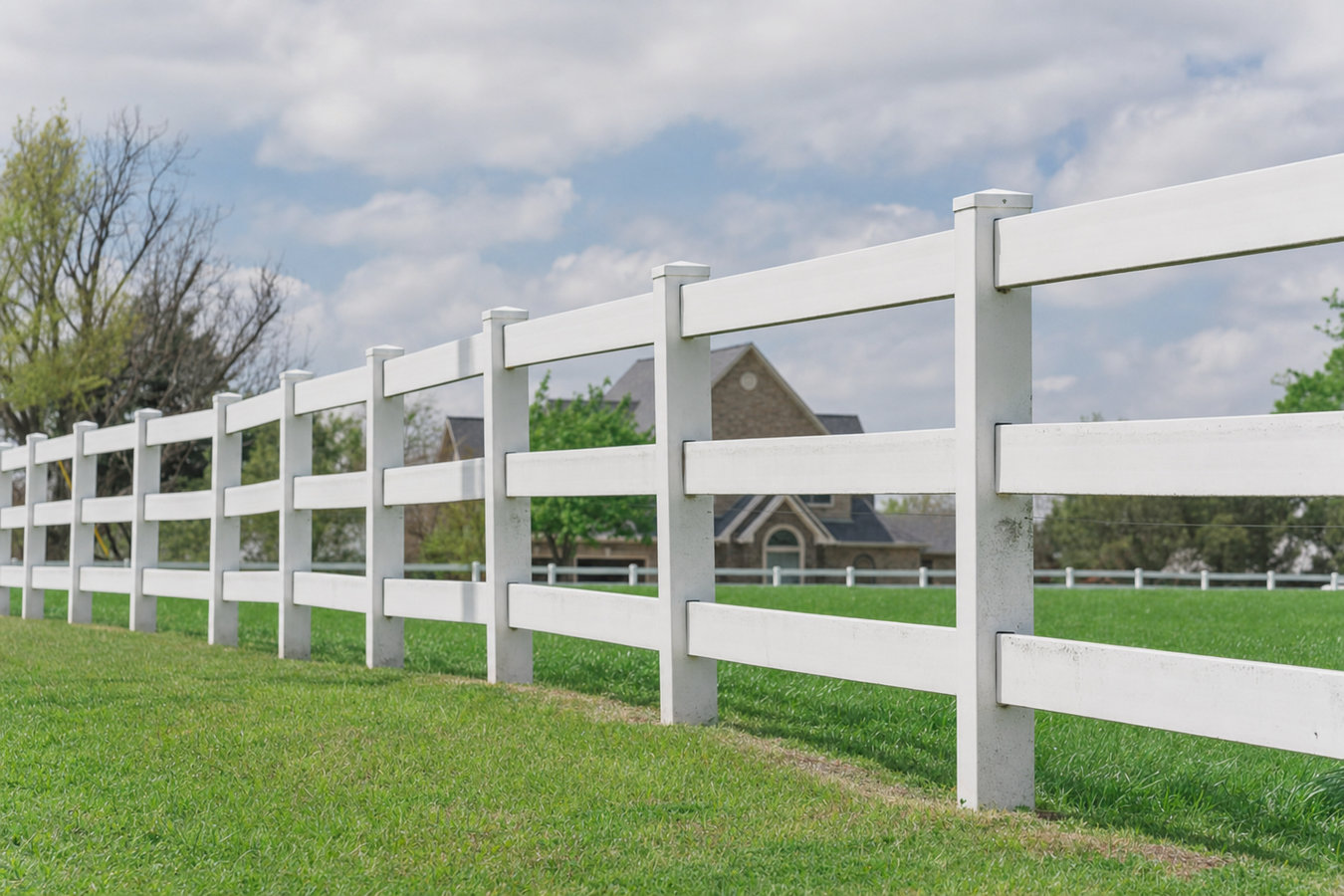
Farm and ranch fencing in Twentynine Palms covers perimeter fencing to keep livestock in, predator-exclusion fencing to keep wildlife out, and cross-fencing to divide pastures - installed with steel T-posts and high-tensile wire set through sandy topsoil and caliche hardpan, with most residential-scale ranch jobs completed in one to three days depending on parcel size and terrain.
The high desert around Twentynine Palms is hard on fencing materials and hard on the crews who install them. Caliche - the rock-hard mineral layer beneath the sandy topsoil - requires specialized equipment to break through, and contractors who do not know this area tend to underestimate both the time and the cost. A fence that looks solid at the end of installation but was built with posts set only into the loose sandy layer will lean or pull out within a season or two. If you also need a gate that handles equipment access or animals, ask about our chain link fence installation service - chain link is a common choice for smaller animal enclosures and equipment yards on rural parcels.
For rural properties that also need to manage dogs or smaller animals separately from livestock, our pet and dog fencing service can be combined with a ranch perimeter in a single project to keep different areas of a large parcel separated and secure.
Walk your fence line and look for posts that have tilted, shifted, or started to pull out of the soil. In Twentynine Palms, this typically happens after a season of high winds or when posts were not set deep enough through the sandy upper layer into stable ground. A leaning post is a security failure - livestock can push through a compromised section, and coyotes will find the gap quickly.
Sagging wire means tension has been lost - either because the wire has stretched through heat cycles or because anchor posts have shifted. In the Mojave, wire expands and contracts with temperature swings more dramatically than in cooler climates. If you can push a section of wire more than a few inches by hand, the fence is no longer doing its job and predators are likely already testing that weakness.
Blowing sand is constant in Twentynine Palms, and it piles against fence bases and traps moisture against posts. That combination accelerates corrosion on wire and hardware and rots the base of wood posts faster than the visible upper section. Rust streaks running down from wire connections, or soft crumbling wood at ground level, mean the fence is deteriorating from the bottom up.
If you are bringing livestock onto a property for the first time, or switching from one animal type to another, your existing fence may not be the right type. Different animals require different fence heights, wire spacings, and tension levels. A fence that kept cattle in will not necessarily contain goats. The same logic applies if you want to rotate grazing or create a separate paddock - cross-fencing is a project that pays for itself quickly.
We install barbed wire, woven wire, high-tensile smooth wire, and combination fencing on rural and agricultural parcels throughout the Twentynine Palms area. Each material suits different animals and different purposes. Barbed wire works well for cattle on large perimeters where you need coverage over long runs at reasonable cost. Woven wire - sometimes called field fence or no-climb - is better for smaller livestock like goats and sheep that can slip through wider wire gaps. High-tensile smooth wire is the most durable long-term choice for perimeters in this climate - it holds tension through the extreme temperature swings that cause softer wire to sag, and it does not present the injury risk that barbed wire does when animals push against it. For enclosures that need to keep small animals in or predators out at ground level, we can combine woven wire on the lower section with smooth or barbed wire above. If you need access for equipment alongside livestock, ask about our chain link fence installation options for equipment yards and smaller enclosures, which pair well with a wire perimeter on the same parcel.
Post selection matters as much as wire type in this climate. Steel T-posts outlast wood in the Mojave because they do not rot and they handle the temperature extremes that crack and split wood posts over time. Corner posts and end posts, which bear the most load in any wire fence, are set deeper and braced to handle wind tension - this is where cheap jobs fail first. We do a visual survey for desert tortoise burrows before digging on any local parcel, as the Mojave desert tortoise is a protected species whose habitat overlaps with much of this area. The U.S. Fish and Wildlife Service provides current guidance on protected species considerations for land disturbance in this region. For properties that also need dog or small-animal enclosures separate from the main livestock area, our pet and dog fencing service can be built into the same project.
The most cost-effective option for cattle on large parcels - suited for property owners who need to cover long fence runs at a practical price per linear foot.
The right choice for goats, sheep, and smaller livestock that can slip through wider gaps - also effective as a predator-exclusion barrier at ground level.
The most durable long-term option for the desert climate - holds tension through extreme heat cycles without sagging, and works well on large perimeters where maintenance access is limited.
Interior dividers for grazing rotation, breeding separation, or creating safe paddocks near structures - suited for landowners actively managing their animals and land.
Most of the land around Twentynine Palms sits on a mix of loose desert sand and caliche - a hard calcium carbonate layer that forms just below the surface across much of the Mojave. Digging through caliche requires equipment that not every fencing contractor carries. A contractor who does not plan for it will either undercharge and then surprise you with extra costs once the crew hits hard ground, or simply set posts in the sandy upper layer and call it done. Posts set only in sand will not survive the combination of wind load and seasonal temperature cycles that characterize this area. The UC Cooperative Extension provides livestock fencing guidance specific to California conditions, including post depth recommendations for different soil types. Homeowners in Morongo Valley deal with the same caliche and sandy soil issues, and we apply the same post-depth standards across all the rural parcels we work on in this region.
The desert wildlife dimension is also real here in a way it is not in most of Southern California. Mojave desert tortoises are federally protected, and their burrows are present on many local parcels. Post-hole digging on a parcel without a visual survey first is a legal risk and an ethical one. Properties near Joshua Tree National Park also need to think about wildlife movement corridors - some fencing designs that work fine in a suburb create problems near a national park boundary. We conduct a pre-dig visual survey on every rural project and can discuss design options that protect your livestock while avoiding unnecessary barriers to protected desert wildlife. Homeowners in Landers face the same conditions, and the same care applies on every rural project we take in this part of San Bernardino County.
We respond within one business day. In the first conversation, we ask how much fence you need, what the fence is for, and whether you have a property survey or visible boundary markers. Be honest about what you know and what you do not - we will help figure out the rest at the site visit.
We walk your property before quoting. In Twentynine Palms, this matters more than almost anywhere else because soil conditions, terrain, and access vary significantly from parcel to parcel. The site visit takes 30 to 60 minutes, and you receive a written proposal that covers fence type, materials, total linear footage, gates, and the full price.
Before any posts go in, we do a visual survey for desert tortoise burrows and confirm you know where your property line sits. Installing a fence even a few inches onto a neighbor's land creates a legal dispute that costs far more to resolve than the fence itself. If boundary markers are not visible, we will flag the issue before work begins.
The crew works along the fence line systematically - corner and end posts first, then line posts, then wire stringing and tensioning. Most residential-scale ranch jobs in this area are completed in one to three days. We walk the fence with you at the end, demonstrate gate hardware, and confirm wire tension looks even across the full run.
We know the caliche, the wind, and the permit requirements in San Bernardino County. Call or send us a message and we will walk your property and give you a written estimate with no surprises built in.
We carry the equipment needed to break through caliche on every rural project in this area. Contractors who are not familiar with Mojave soil conditions often underbid the job and then add charges once they hit hard ground - or worse, set posts only in the sandy upper layer and walk away. We account for local soil conditions in every estimate, so the price you see is the price you pay.
Corner posts and end posts carry the most load in any wire fence, and they are the first to fail when they are not braced and set deep enough. The strong wind events that move through the Mojave - particularly in spring - will test every post anchor on your property within the first year. We set corners and ends to the depth and bracing standard the conditions here actually require.
The Mojave desert tortoise is a federally protected species, and its burrows are present on many parcels in and around Twentynine Palms. We conduct a visual survey for active burrows before digging begins on every rural project. This is not just an ethical practice - disturbing an active burrow without taking reasonable precautions creates real legal exposure for the property owner.
Property line disputes are one of the most common and costly outcomes of a fencing job done without proper preparation. We confirm your boundary before setting any posts - if markers are not visible on your lot, we flag the issue and discuss options before work starts. The California Department of Food and Agriculture provides guidance on agricultural fencing standards applicable to rural properties in this region. The National Park Service also publishes guidance on wildlife-friendly fencing near Joshua Tree National Park boundaries.
Every farm and ranch fencing job we take in the Twentynine Palms area gets the same standard - a site visit before any price is given, a pre-dig survey, posts set through caliche into stable ground, and a walkthrough with the property owner when the work is done. That is what it takes to build fencing that lasts in this climate.
Secure enclosures for dogs and smaller animals on rural properties - often combined with a ranch perimeter in a single project.
Learn MoreA durable enclosure option for equipment yards, kennels, and smaller animal areas that pairs well with a wire perimeter on the same parcel.
Learn MoreSpring wind season tests every post anchor on your property - call us now and we will walk your land, account for the caliche, and give you a price with no hidden charges.